1918c. 1918–1937 · Harlem, Manhattan
Harlem Renaissance
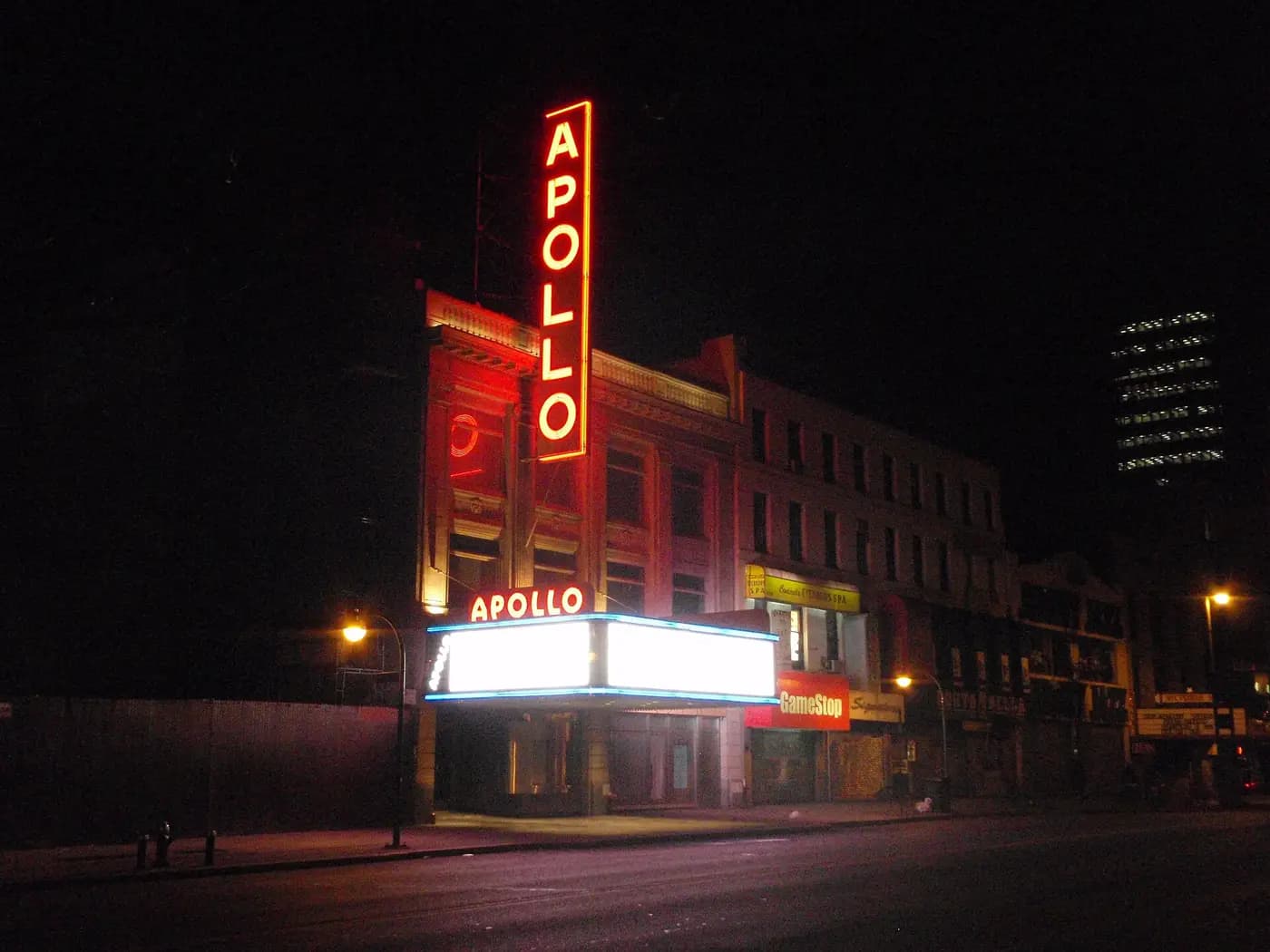
Drawn by the Great Migration from the South and by arrivals from the Caribbean, Black writers, musicians, artists and thinkers made Harlem the capital of African American culture in the 1920s and 1930s. Langston Hughes, Zora Neale Hurston, Duke Ellington and Alain Locke, editor of The New Negro, gave voice to a confident new identity that shaped jazz, literature and the civil rights movement.
Sites
- Site 1: Schomburg Center for Research in Black CultureLibrary built on Arturo Schomburg's collection; Langston Hughes's ashes lie beneath its floor.Map ↗
- Site 2: Apollo Theater125th Street theatre, a stage for Black performers since 1934.Map ↗
- Site 3: Strivers' Row (St. Nicholas Historic District)1890s rowhouses on West 138th and 139th streets, home to Black professionals.Map ↗
Guides who take you there
History-only · order never for saleWe haven't found an independent history guide for this yet. Guide here? Tell us about your tours.
Also in New York City
More from the Interwar

Read more: reference. Summary written by History-Tours.com.