600c. 600–1200 · Chichén Itzá, Yucatán
Chichén Itzá and the northern Maya
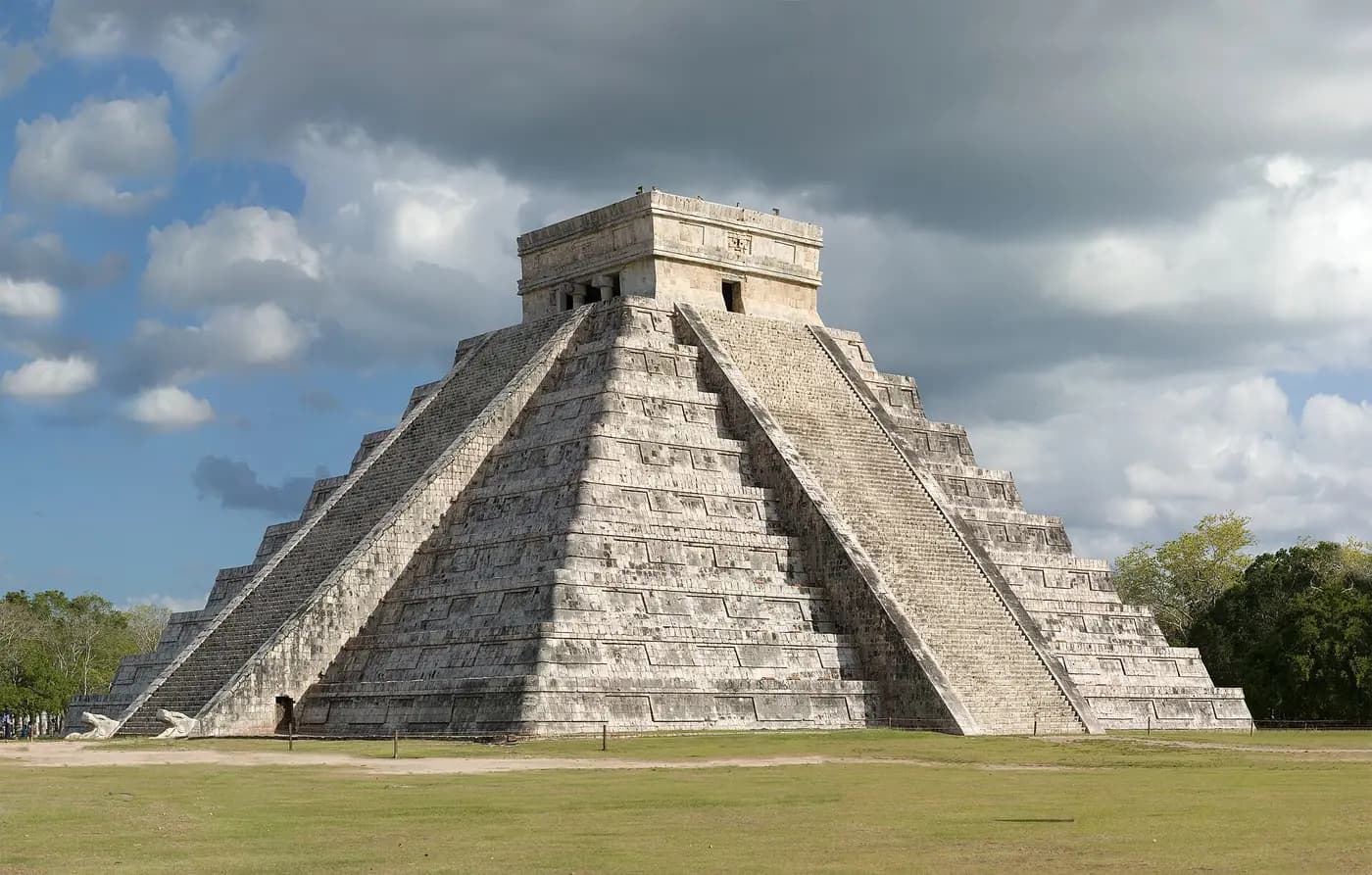
Chichén Itzá became the leading city of the northern Yucatán between about 600 and 1200, mixing Maya traditions with styles shared with central Mexico, such as the cult of the feathered serpent Kukulcán. Its stepped pyramid is built so that equinox shadows ripple down the north stairway like a serpent. Pilgrims threw jade, gold and sometimes people into its Sacred Cenote, a natural sinkhole.
Sites
- Site 1: El Castillo (Temple of Kukulcán)Nine-level pyramid with four stairways; climbing it has been banned since 2006.Map ↗
- Site 2: Great Ball CourtThe largest ball court in ancient Mesoamerica, with carved reliefs of players.Map ↗
- Site 3: Sacred CenoteSteep-sided sinkhole at the end of a raised causeway north of the pyramid.Map ↗
Guides who take you there
History-only · order never for saleWe haven't found an independent history guide for this yet. Guide here? Tell us about your tours.
More from the Medieval

Read more: reference. Summary written by History-Tours.com.